

Black Mold Removal in Indianapolis, IN
“Black mold” is the search people make when they are worried. Maybe there is a dark patch spreading on the basement drywall, or a slow leak finally showed itself, and somewhere along the way you read that black mold is the dangerous kind. The honest answer is more measured than the headlines, and it is worth understanding before you panic or before you pay anyone to tear out a wall.
The Mold Removers, LLC has been removing mold from Indianapolis homes for over 20 years. We handle black mold the way it should be handled: identify the moisture source, contain the area, and remove the affected material properly rather than smearing it around with a spray bottle.
What People Mean by “Black Mold”
When people say black mold, they usually mean Stachybotrys chartarum, a dark green-to-black mold that grows on constantly damp, cellulose-rich materials like drywall, wood, and paper backing. It has a reputation because it can produce mycotoxins. But color alone does not identify it. Plenty of harmless dark molds look similar, and the grime in bathroom grout is almost never Stachybotrys. Only a lab can confirm the species for certain.
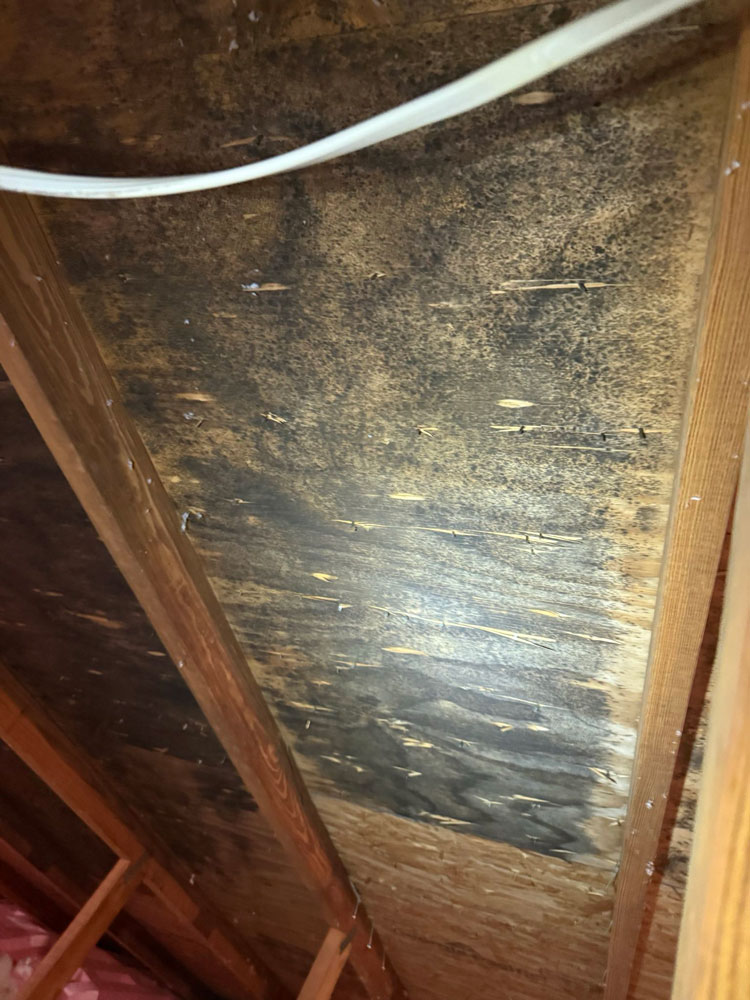
Why Black Mold Removal Is Different
This is where black mold genuinely differs from a surface patch you can wipe off, and it is the reason a spray-and-pray approach fails. Stachybotrys grows into porous materials, not just across the top of them. By the time you see it on drywall or insulation, the root structure is embedded in the material itself.
That changes the whole job. Wiping or spraying the surface leaves the colony alive underneath, and scrubbing dried mold is worse than doing nothing, because disturbing it releases spores and fragments into the air you breathe. Effective black mold removal is about containment and full material removal, not surface treatment.
- Stop the water first. Stachybotrys only persists where there is chronic moisture. If we do not fix the leak, condensation, or drainage issue, it comes back. That step is not optional.
- Contain the area. We seal off the affected space so spores are not carried into clean parts of the home during the work.
- Remove the affected porous material. Colonized drywall, insulation, and similar materials are removed rather than surface-cleaned, because cleaning the face of them does not reach the growth inside.
- Clean surrounding surfaces properly. Non-porous surfaces nearby are cleaned using damp methods that do not kick material into the air.
- Dry and verify before rebuild. Materials have to be fully dry before anything is closed back up, or the problem simply restarts behind the new wall.
Our owner is on-site for this work. There is no handoff to a subcontractor midway through.
Where Black Mold Shows Up in Homes
Stachybotrys needs sustained moisture and a cellulose food source, which is exactly what older Indianapolis housing tends to provide when a water problem goes unaddressed. It is not a bathroom-tile situation; it is a chronic-dampness situation. The spots where we most often find it locally line up with the same moisture patterns behind most mold problems in Marion County:
- Finished basements with hidden leaks: Paper-faced drywall against a foundation wall that sweats or seeps through hairline cracks is a textbook host, and the growth is often hidden behind the finished surface until it is widespread.
- Crawl spaces under older homes: Wood framing and subfloor that stay damp from clay-soil drainage and humid summer air give Stachybotrys the long-term moisture it needs.
- Attic decking under slow roof leaks: A leak that was never fully dried, combined with poor ventilation, keeps the roof deck wet long enough for dark mold to establish.
- Around failed appliances and burst pipes: Any water event that sat for days before drying, especially inside walls, is a candidate.
Learn About
Our Black Mold Services for Properties
From confirming what you are actually dealing with to removing it safely and keeping it from coming back, here is how the work breaks down.
Confirm What You Are Dealing With
Because color does not identify a mold, we start by finding the moisture source and, when it matters, taking lab-analyzed swab or air samples to confirm whether you actually have Stachybotrys or a less concerning look-alike. This keeps you from paying for demolition you do not need, and it tells us how careful the removal has to be.
Contain the Area and Remove the Material
We seal off the affected space, then remove colonized drywall, insulation, and other porous materials rather than surface-treating them. Containment and careful removal keep spores from spreading through the home during the work, which is the single most important part of doing this safely. For crawl space and basement jobs, this includes the light demolition needed to reach the growth.
Post-Remediation Testing and Documentation
After removal, we can perform follow-up testing and provide written documentation of the work and results. If you are buying or selling, that clearance record is what buyers, agents, and lenders want to see. If you are staying put, it is confirmation the problem is actually resolved rather than painted over.
Fix the Moisture So It Does Not Return
Black mold is a moisture symptom. Removal is only permanent if the water problem is solved, so we also install dehumidifiers and sump pumps, handle crawl space encapsulation and conditioning, and correct the drainage and ventilation issues that let it grow in the first place. This is the difference between a fix that holds and one that reappears behind the new drywall.
Why Homeowners Call Us for Black Mold
Black mold is the kind of find that makes people anxious, and plenty of companies are happy to lean on that fear. We would rather give you the straight version and do the work right.
- Straight answers, not scare tactics: We tell you what we actually find, including when a dark patch turns out to be harmless. You get facts you can make a decision on.
- You talk to the owner: Every call goes to the person doing the work. No call center, no dispatch layer, no handoff to a subcontractor partway through the job.
- Over 20 years of hands-on experience: Two decades of removing mold from Indianapolis crawl spaces, basements, and attics means we know where it hides and how these homes fail.
- Certified and insured: We follow established remediation practices for residential and commercial properties, and we are fully insured.
- We fix the cause, not just the stain: Because black mold is a moisture problem, we address the water source so it does not grow back.
Frequently Asked Questions
Not necessarily. Black mold, usually meaning Stachybotrys chartarum, can produce mycotoxins, but the CDC advises treating all indoor mold the same way with respect to health risk and removal. Other molds can also cause problems, and reactions vary a lot from person to person. What matters is that any significant mold growth, and the moisture feeding it, gets removed, regardless of color.
Maybe, maybe not. Many dark-colored molds look like Stachybotrys but are not, and color alone cannot confirm the species. Laboratory analysis of a swab or air sample is the only reliable way to know for certain. We can test when it matters so you are not paying to tear out material based on a guess.
For black mold on porous materials like drywall or insulation, surface cleaning does not work, because the growth is rooted inside the material, not just sitting on top. Scrubbing dried mold can actually make things worse by releasing spores into the air. Small non-porous surfaces are sometimes cleanable, but embedded growth on porous materials needs containment and removal.
Because the moisture source is still there. Stachybotrys only persists where there is chronic dampness, so if a leak, drainage issue, or humidity problem is not corrected, the mold returns no matter how many times the surface is cleaned. Lasting removal always includes fixing the water problem.
Yes. After remediation we can perform follow-up testing and provide written documentation of the work and results. This is especially useful for real estate transactions, where buyers, agents, and lenders often want clearance records before closing.
Yes. We are fully insured and certified to provide removal services for residential and commercial properties.
Worried About Black Mold in Your Home? Let’s Take a Look.
If you have found a dark patch, a musty smell, or a moisture problem you cannot explain, you do not have to guess about what it is or how bad it is. Call us and talk to our mold specialists directly. We will give you a straight assessment and, if removal is needed, handle it the right way from the first inspection through final clearance.