

Real Estate Mold in Indianapolis, IN
Mold discovered during a home inspection does not have to kill your deal. The Mold Removers, LLC has been helping Indianapolis-area realtors, sellers, and buyers with real estate mold in Indianapolis, IN for over 20 years, from the initial inspection to certified clearance, so transactions close on schedule.
Why Mold Is a Frequent Problem in Real Estate Transactions
Indianapolis sits in Central Indiana where humid summers, cold winters, and frequent spring rainfall create the moisture conditions mold needs to establish itself. The city’s housing stock ranges from early-1900s bungalows in neighborhoods like Fountain Square and Irvington to mid-century ranch homes on the Northside and newer construction in Fishers, Carmel, and Westfield. Older homes in particular, many of which have unfinished or partially finished crawl spaces and basements, are prone to long-term moisture infiltration that goes unnoticed until a buyer’s inspector flags it.
One Person, Start to Finish: Why Realtors Trust Us
Most remediation companies send a salesperson to the assessment, a crew to do the work, and someone different to close out the job. With The Mold Removers, LLC, the owner is involved from the first call through final clearance. That continuity matters in real estate deals where timing is tight and miscommunication can cost a client their closing date.
With over two decades of mold work in the Indianapolis area, our owner has seen virtually every type of mold situation a Central Indiana property can present, from century-old full basements in the Near Eastside to pier-and-beam crawl spaces in older Speedway-area homes to finished lower levels in newer Noblesville construction. That experience translates into accurate scoping, realistic timelines, and fewer surprises after work begins.
We are also a locally owned, Indianapolis-based business, not a national franchise. Realtors who work with us deal with the same person every time, which makes follow-up communication faster and accountability clearer during the critical days before a scheduled close.
How a Real Estate Mold Case Works With Us
Here is what the process typically looks like from the moment a realtor or homeowner contacts us:
- Initial Call: You reach our owner directly. We discuss what the inspector found, the property type, and where the affected areas are. We schedule an on-site assessment as quickly as your timeline requires.
- On-Site Inspection and Testing: We visit the property, perform a visual inspection, collect any needed swab or air samples, and assess moisture conditions. For straightforward testing cases, we can often give a scope and estimated cost at the time of the visit.
- Remediation: We schedule and complete the remediation work within a timeframe aligned with your closing deadline. We handle containment, removal, treatment, and any structural restoration needed.
- Clearance Testing: Post-remediation air and surface sampling confirms the space is clear. We provide written documentation suitable for your transaction file.
- Follow-Up: If the buyer, their lender, or their attorney has questions about the report, we are available to respond directly.
Full-Scope Mold Services Tailored for Real Estate Transactions
We handle mold situations from discovery through clearance, so realtors and their clients only need one call. Our services for real estate transactions include:
Comprehensive Mold Inspection and Testing
Our inspection process is built to give buyers, sellers, and agents the documentation they need to move forward with confidence. We perform:
- Visual Inspection: A thorough walk-through of attics, crawl spaces, basements, bathrooms, and any area flagged in the buyer’s inspection report. We identify visible mold growth, water staining, and conditions that promote mold activity.
- Moisture Testing: We use moisture meters and thermal tools to locate hidden moisture behind walls, under flooring, and inside structural cavities, finding problems that a visual check alone can miss.
- Swab Testing: Surface samples collected from suspected mold areas and sent to an accredited laboratory to confirm species type and concentration. Documentation is provided for disclosure and negotiation purposes.
- Indoor Air Quality Testing: Air sampling measures spore counts inside the home versus outdoor baseline levels. Elevated indoor counts can indicate a hidden mold source even when no visible growth is found, which is especially useful when a buyer wants comprehensive documentation before closing.
Mold Remediation
Once testing confirms the scope of the problem, we perform remediation using proven methods appropriate to the affected area and material type. Our remediation services for real estate situations include:
- Basement Mold Removal and Remediation: Basements in older Indianapolis-area homes often develop mold on block foundations, floor joists, and stored materials. We contain the area, remove contaminated material, treat structural surfaces, and restore the space to a condition that meets clearance standards.
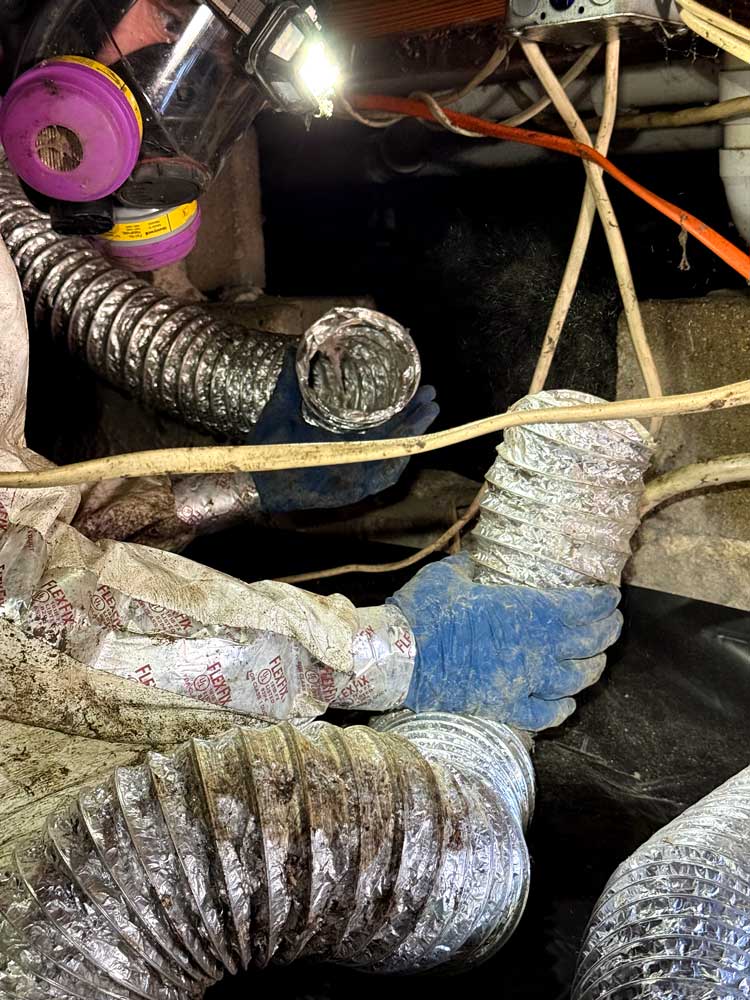
- Crawl Space Mold Remediation: Crawl space mold is one of the most common deal-stoppers we see in Central Indiana real estate. We remove contaminated insulation and debris, treat structural wood, and offer encapsulation and conditioning services to prevent recurrence, giving buyers the assurance that the fix is long-term, not cosmetic.
- Encapsulation: A full crawl space encapsulation seals the space against future moisture intrusion. This is frequently requested by buyers as a condition of closing, and we provide it as part of a complete remediation package.
- Crawl Space Conditioning and Dehumidifier Installation: In cases where humidity control is the root cause, we install dehumidifiers rated for the space and condition the crawl to maintain safe relative humidity levels year-round.
- Attic Mold Remediation: Attic mold in Indianapolis homes is typically caused by inadequate ventilation or bathroom exhaust fans venting into the attic rather than outside. We treat affected decking and framing, and address the source condition where possible.
- Drywall Removal and Installation: Where mold has penetrated drywall, we perform light demolition, remove the affected material, treat underlying framing, and install new drywall as needed to restore the space.
- Carpet Removal: Carpeting over a wet slab or in a chronically damp basement is a common mold host. We remove and dispose of contaminated carpet as part of the remediation scope.
- Sump Pump Installation: For properties where groundwater intrusion is contributing to basement moisture, we install sump pumps to actively manage water infiltration, a fix that buyers and their agents frequently require before a deal proceeds.
- Residential and Commercial Fogging: Fogging with an EPA-registered antimicrobial agent treats airborne spores and surface contamination in large or hard-to-access spaces. It is often used as a final treatment step before clearance testing.
- Junk Removal and Cleanout: Basements and crawl spaces used for storage frequently contain materials that harbor or obscure mold. We remove debris and stored items as part of our cleanout service so the remediation can reach every affected surface.
Mold Clearance Testing Before Closing
Clearance testing confirms that remediation was successful and that indoor air quality meets acceptable standards. We provide a written clearance report that documents post-remediation air and surface sample results. This report is the documentation buyers, lenders, and real estate attorneys need to confirm the property is ready to close. We can coordinate testing timelines with your closing schedule so the transaction does not stall.
Mold Conditions Specific to the Indianapolis Metro Market
The Indianapolis area presents a specific combination of factors that make mold a persistent real estate issue:
- Marion County housing stock: A large share of the residential inventory in Marion County was built before 1970, when vapor barriers and crawl space encapsulation were not standard practice. These properties regularly present with long-standing moisture issues that have allowed mold to colonize floor joists and rim boards.
- Central Indiana clay soils: Indiana’s clay-heavy soils drain slowly and hold moisture against foundations for extended periods after rain events. This is a primary driver of basement seepage and crawl space humidity in neighborhoods across the metro, from Broad Ripple to Beech Grove.
- Indiana’s four-season climate: The freeze-thaw cycle through late winter and early spring, combined with high summer humidity, creates two distinct peak seasons for moisture-related mold development. Homes inspected in spring frequently show mold that developed over the preceding winter.
- White River corridor and flood-adjacent properties: Properties near the White River and Fall Creek in areas like Nora, Broad Ripple, and the near Northside carry elevated basement moisture risk due to seasonal high water tables.
- Hamilton County new construction: Newer builds in Carmel, Fishers, and Westfield are not immune. Tightly sealed construction can trap interior humidity, and crawl spaces in newer homes can develop mold quickly if a drainage or HVAC issue goes unaddressed.
Frequently Asked Questions
Most residential mold remediation projects we complete in the Indianapolis area are finished within one to three days, depending on the scope of work. Crawl space and basement projects commonly fall within that timeframe. We work with your closing schedule whenever possible and can often prioritize time-sensitive real estate transactions. Post-remediation clearance testing results are typically available within 24 to 48 hours after samples are collected.
Responsibility for mold remediation costs is negotiated between the buyer and seller rather than determined by law. In many Indianapolis-area real estate transactions, sellers choose to cover remediation costs or provide a credit at closing to help keep the sale moving forward. We provide prompt written estimates to support negotiations and transaction timelines.
Yes. We provide written inspection reports, laboratory results from air and surface sampling, and post-remediation clearance reports. These documents are prepared to support real estate disclosures and can help satisfy requests from mortgage lenders, FHA or VA appraisers, and real estate attorneys.
For straightforward situations involving visible mold, we can often assess the problem and begin remediation shortly afterward. When testing is necessary to evaluate hidden mold or document indoor air quality, we complete the inspection and laboratory testing first, then schedule remediation once the results are available. We clearly explain each step of the process before work begins.
Yes. We serve the greater Indianapolis area, including Hamilton, Hendricks, Johnson, and Hancock counties, and we also travel throughout Indiana for larger or specialized mold remediation projects. Contact us to confirm service availability for your location.
Mold removal focuses on eliminating contaminated materials and treating affected surfaces. Encapsulation involves installing a vapor barrier and other moisture-control measures to help prevent future mold growth, particularly in crawl spaces. In many Indianapolis-area homes, both services are recommended to remove existing mold while addressing the conditions that allowed it to develop.
Get Your Property Cleared for Closing
A mold finding does not have to end a deal or delay a closing. Our mold removers have been helping Indiana realtors and their clients resolve mold issues efficiently for more than 20 years, with inspection, remediation, and clearance testing handled by the same experienced, owner-operated team from start to finish.